
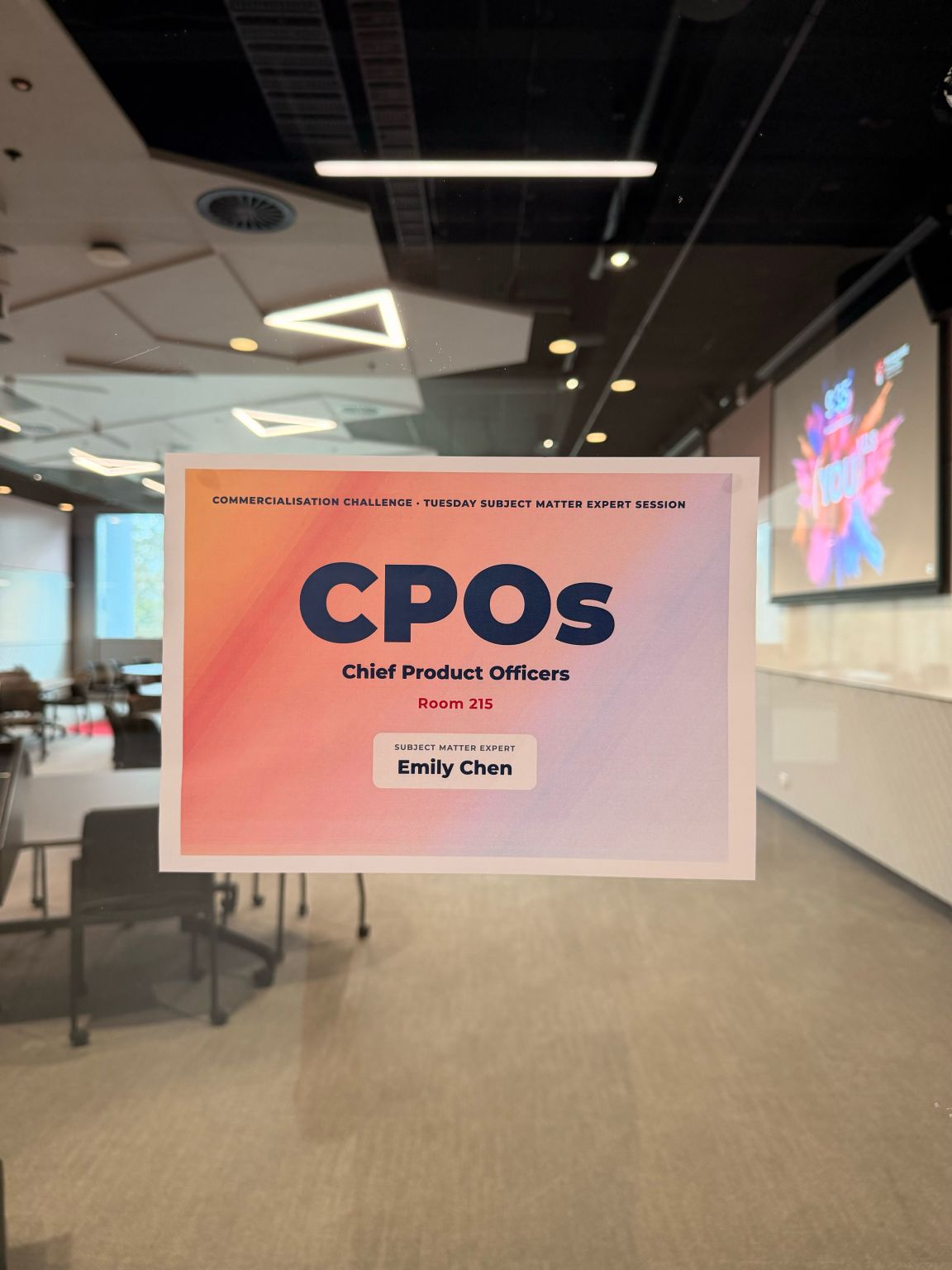
I recently had the pleasure of chatting with Year 10 students about the role of a Chief Product Officer as part of their Commercialisation Challenge.
Standing in front of a room of Year 10s and fielding their questions was mildly terrifying, but I thoroughly enjoyed it. I loved hearing how they think about product, from ideation and design thinking through to pricing and bringing ideas to life.
One conversation in particular stayed with me.
Their brief was centred on thrift-store organisations. Donations are changing, with fewer high-quality clothes arriving in bins, while more people, particularly younger people, are choosing to resell clothes they no longer want. The students were asked to consider the strategy: should these organisations keep running shops, adapt their model, or close them down altogether?
It led to a thoughtful question: if products are never finished, how do you know when it is time to shut one down?
Two different concepts
For me, these are two different concepts.
When we say a product is never done, we mean that launch is not the finish line. The work continues through customer feedback, learning, updates and improvement. That is what makes product work different from a project: a project can be completed and handed over, while a product needs ongoing attention.
But that does not mean every product should exist forever.
A separate and equally important discipline is understanding where a product sits in its lifecycle. Before making a big decision to invest, pivot or retire it, we need to look closely at the evidence:
- Is there still a meaningful user need?
- Are people adopting and returning to it?
- Is it financially sustainable?
- Has the market changed?
- Is there still product-market fit, or is there a better way to create the impact the organisation exists for?
In practice, product managers are often inheriting something that others have already built. That makes awareness and intention especially important. Before deciding what to change, we need to understand what exists, who it serves, what has shifted and what the data is telling us.
I also shared with the students that it is difficult to predict exactly what product management will look like by the time they enter the workforce, particularly in an AI era. But for any of them who choose a career in product, I think the foundations will remain the same: critical thinking, curiosity and the ability to ask good questions.
AI may make it faster to build and iterate. It cannot replace the judgement required to ask whether we are solving the right problem, or whether it is time to let a product go.